If you spend any time scrolling through fitness influencers or strength and conditioning accounts, you’ll have seen plenty of clips promising to help you “train like a pro”. Some of them are brilliant. There are many excellent S&C coaches sharing thoughtful, well-planned training ideas. But mixed in with that good work is a lot of weird and wonderful content that can confuse athletes about what effective training actually looks like. Sometimes it is harmless entertainment. Sometimes it is risky like the picture below. And often, it is designed more for clicks than performance.

Specificity is a key principle of training, but it is also one of the most misunderstood. In simple terms, training is most effective when the exercises we choose support the physical demands of the sport. That does not mean replicating the sport in the gym or adding balls, rackets, batons, hurdles or other equipment to make an exercise look more “sport specific”. It means understanding the movement, the muscles involved, the speed of action, the joints under load, and the physical qualities the athlete needs to improve.
Assessing the Demands of Your Sport
Let’s use fencing as an example, as it is a sport I am currently working with. Fencing is explosive, reactive and precise. Athletes perform short, sharp bursts of movement, often followed by periods of recovery. They need to accelerate, decelerate, change direction, strike, evade and recover position quickly. They also compete wearing equipment and carrying a weapon, but that does not mean we need to recreate a fencing bout in the gym with a visor on or a sabre in hand.
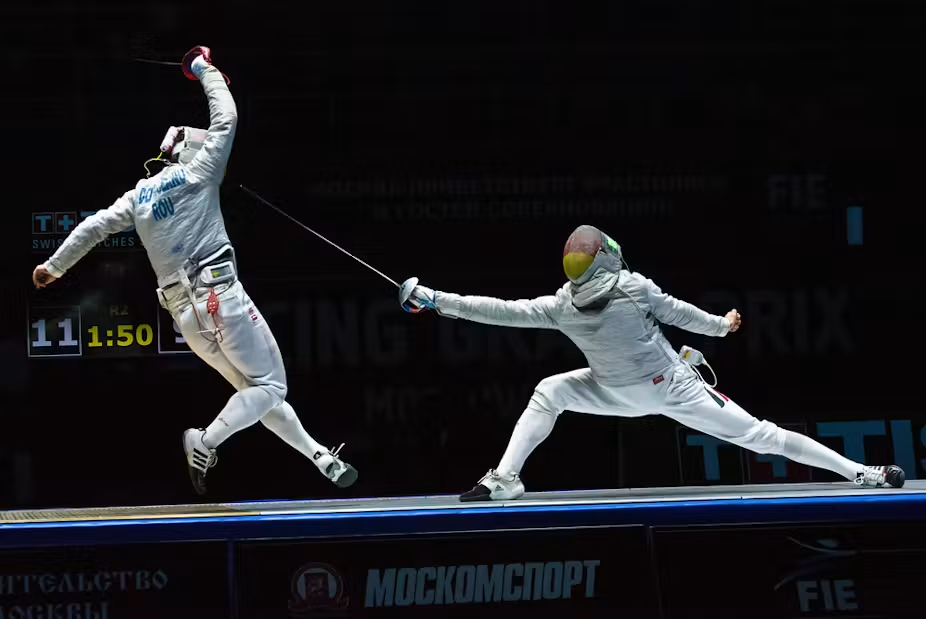
The better approach is to break the sport down. For fencing, we may look at forceful triple extension through the ankle, knee and hip; the ability to be springy and reactive; strong landing mechanics and force absorption; core strength to maintain posture and transfer energy; and upper-body strength to support repeated attacking actions. From there, we assess the athlete’s movement and strength, then select exercises that build the physical qualities they need. A fencing lunge, for example, relies heavily on powerful extension from the back leg. To improve that, we can develop strength and rate of force development (how quickly you can move) through squats, lunges, split squats, push press variations, Olympic lift derivatives and carefully progressed plyometric work. The fencing skill itself is developed through technical fencing practice. Our role in the gym is to build the physical capacity that allows the athlete to express that skill more effectively.
Don’t Be Duped by Fads
Looking back at the picture of the athlete standing on a resistance band and a barbell on her back is why athletes, parents and coaches need to look beyond how impressive an exercise appears on social media. Ask what training effect the exercise is meant to create. Is there enough load to develop strength? Is the movement safe? Is the athlete being challenged in a way that genuinely transfers to their sport, or is the exercise just complicated for the sake of it? If an exercise places the athlete at unnecessary risk, the same physical quality can almost always be trained in a simpler, safer and more effective way.
So, if you are starting in the gym or working with a coach, use these questions to cut through the noise and understand whether your training is genuinely helping your performance:
- Do I understand why I am doing this exercise?
- Does it develop a physical quality that supports my sport?
- Is the risk appropriate for the potential reward?
- Is the session targeting the muscles, joints and movement qualities I need?
- How will we measure whether I am improving?
Seeking answers to these questions will get you on the right track to supporting your goals!
Leave a Reply